Why men’s vitality needs change with age
Energy, stamina and recovery don’t decline because of one thing — they decline because of several small gaps at once.

What actually changes, and when
From the early 30s onward, several things shift gradually: testosterone declines slowly, recovery from exercise takes longer, and nutrient absorption becomes somewhat less efficient. None of this happens overnight — which is exactly why it’s easy to write off as “just getting older” rather than something you can support.
Common gaps in a typical diet
Zinc is disproportionately linked to energy metabolism and testosterone support and is among the nutrients most commonly under-consumed in a standard modern diet — not from eating badly, necessarily, just from not eating a wide enough range of whole foods consistently. It's part of why zinc anchors most men's vitality formulas.
What "vitality support" actually means here
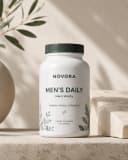
This isn’t about stimulants — there’s no caffeine or synthetic stimulant in the blend. It’s a combination of zinc, an amino acid (L-Arginine), and traditional botanicals (Tongkat Ali, Maca, Ginseng and others) chosen for stamina, circulation and everyday performance rather than a short-term jolt.
Zinc's specific role
Zinc is involved in hundreds of enzymatic processes in the body, including ones tied to testosterone production and immune function, and it's lost through sweat — which matters more than people expect for anyone regularly active or exercising. It's one of the more commonly under-consumed minerals in modern diets that skew toward processed food. Zinc status is also linked to hair health specifically — see zinc deficiency and hair loss for that separate angle.
Tongkat Ali and Maca, briefly
Tongkat Ali (Eurycoma longifolia) and Maca root are two of the most researched traditional botanicals for male vitality — Tongkat Ali more associated with testosterone and stress-related fatigue, Maca more associated with libido and stamina. We go deeper on the evidence for each in Tongkat Ali vs Maca, compared.
Exercise recovery and nutrient demand
Regular training increases the body's demand for zinc (lost through sweat, needed for tissue repair) and puts more pressure on the general systems L-Arginine and the traditional botanical blend are aimed at supporting — circulation, stamina and everyday performance. Someone training consistently has meaningfully higher nutritional requirements than someone who isn't.
Signs it might be worth looking at your baseline
Persistent fatigue that sleep doesn't fix, recovery that's taking noticeably longer than it used to, or a general sense of running on a lower gear are all common, nonspecific signals. None of them confirm a nutrient gap on their own — but if they've been present for a while, it's a reasonable prompt to look at diet, and worth ruling out other causes with a doctor if they persist.
Building it into a routine
Because the goal is closing small, consistent gaps rather than producing an immediate effect, daily use over months is what the underlying ingredients are studied at — not a single dose before a big day.
L-Arginine and circulation
L-Arginine is an amino acid the body converts into nitric oxide, which supports blood vessel dilation — the basis for its common inclusion in circulation- and performance-focused blends. It's one of the better-evidenced ingredients in this category, alongside zinc.
The traditional botanical blend, honestly
Beyond zinc, Tongkat Ali, Maca and L-Arginine, formulas like this typically include a broader proprietary blend of traditional botanicals (Tribulus Terrestris, Muira Puama, Ginseng and others). Their modern clinical evidence is generally thinner than the core ingredients' — included for a long history of traditional use, not because each one is individually well-studied. Worth knowing that distinction rather than assuming the whole label carries equal evidence weight.
How this differs from a pre-workout
A pre-workout is built around short-term stimulation — usually caffeine, sometimes other stimulants — meant to be felt within the hour. This is built around closing ongoing gaps that support stamina and vitality at a baseline level; it's not meant to produce an immediate, felt effect the way a stimulant does, and the two aren't really interchangeable.
Common myths about men's vitality supplements
Two persistent ones: that any "men's vitality" formula must secretly be a stimulant, and that more of a given ingredient is automatically better than the studied amount. Neither holds up here — this is a stimulant-free blend, dosed at levels reflected in the label, not maximized for a short-term spike.
Diet patterns that make gaps more likely
Frequent travel, shift work, restrictive diets, and a generally narrow range of whole foods all increase the odds of running low on zinc specifically — not from any single bad habit, but from the cumulative effect of a less varied diet over time. It's less about any one meal and more about the overall pattern across weeks and months.
Does it replace the need for a good diet?
No — it's built to close specific, common gaps and add traditional botanical support, not to substitute for whole food more broadly. Someone eating a genuinely varied, whole-food-heavy diet may already be covering the zinc gap, while someone with a narrower diet, heavier training load, or higher stress load is the more likely candidate to notice a difference from adding it.
Frequently asked questions
Is this a testosterone booster?+
It's formulated with ingredients (zinc, Tongkat Ali) that have research supporting normal testosterone levels specifically in men who are below optimal — not to artificially raise testosterone beyond a healthy normal baseline. Anyone with a diagnosed hormonal condition should talk to a doctor rather than rely on a supplement.
Can younger men take it too?+
Yes — while nutrient and vitality gaps become more noticeable with age, the underlying ingredients matter at any age, especially for anyone training regularly or eating an inconsistent diet.
Does it contain stimulants?+
No. There's no caffeine or synthetic stimulant in the formula — it's built around zinc, L-Arginine and traditional botanicals, not a short-term stimulant effect.
How is this different from a regular multivitamin?+
It's formulated specifically around zinc and traditional vitality botanicals rather than a broad, generic spread of every vitamin and mineral at low doses.
Can I take it with a pre-workout?+
Generally yes, since it's stimulant-free, but check your pre-workout's own ingredient list for overlapping zinc or L-Arginine to avoid unnecessary duplication.
When will I notice a difference?+
Because it's designed to close gradual gaps rather than deliver an immediate effect, most people take it consistently for several weeks to a couple of months before assessing whether it's making a difference.
Does it interact with coffee or caffeine?+
No known interaction — since the formula itself is stimulant-free, there's nothing in it that compounds with caffeine's effects the way stacking two stimulants would.
Can I take it at night instead of before a meal?+
It's formulated to be taken 20–30 minutes before a meal, which fits its intended use better than taking it right before bed — check the suggested use on your label.
Is it suitable for vegetarians?+
Zinc and the botanical ingredients are plant- and mineral-based, but check the specific capsule material and full label for your bottle, since manufacturing details can vary.
This article is for general information and isn’t medical advice. Talk to a healthcare professional before starting any new supplement, especially if pregnant, nursing, under 18, or managing a medical condition.