Best supplements for sleep: what actually helps
Melatonin, valerian and magnesium all show up in sleep guidance — here's what's evidenced, and how NIGHT and CALM fit.

“Melatonin has the most evidence behind it as a sleep aid; magnesium supports muscle relaxation and may help reduce the time it takes to fall asleep; valerian root has traditional use for reducing time to sleep onset, with short-term use appearing safe in a 2020 review.”
National Sleep Foundation →What sleep guidance generally recommends
Independent sleep-health organizations consistently point to the same small set of ingredients as best-evidenced: melatonin for circadian timing, magnesium for nervous-system relaxation, and valerian root for easing the transition into sleep — alongside consistent sleep hygiene (a regular schedule, a dark room, caffeine cut off well before evening).
Where NIGHT fits
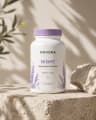
NIGHT combines Melatonin with Valerian, Chamomile, GABA, L-Tryptophan, Lemon Balm and Passion Flower — covering the timing-signal role melatonin plays alongside the broader calming role the herbal ingredients are traditionally used for. See the full mechanism breakdown in melatonin vs valerian and why they're paired for sleep.
Where CALM fits — a different part of the problem
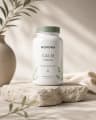
Sleep guidance also distinguishes between nighttime sleep onset and daytime tension that carries into the evening. CALM's L-theanine is formulated for daytime calm without drowsiness — see L-theanine, the calm-without-crash amino acid for why it's a different tool than a nighttime blend.
What supplements won't fix
No ingredient list — from any brand — overrides a bedroom that's too bright, a bedtime that shifts by hours nightly, or heavy screen use right before bed. Sleep guidance is consistent on this point: supplements support a routine, they don't replace one.
Magnesium, specifically
Magnesium doesn't appear in NIGHT's current formula — if magnesium specifically is what you're after, see our honest comparison in magnesium vs melatonin for sleep for how it stacks up against what NIGHT already provides.
 Sleep
SleepMelatonin vs valerian: how they're different, and why NIGHT uses both
One is a timing signal, the other a calming herb. They solve different parts of "I can't sleep."
8 min read Sleep
SleepValerian and Chamomile: why they’re paired for sleep
Two of the most-studied calming herbs, and why they tend to show up together.
8 min read Focus
FocusL-theanine: the calm-without-crash amino acid
It’s the reason green tea feels different from coffee. Here’s what it actually does.
8 min read Sleep
SleepWhy so many Americans and Canadians aren't sleeping enough
National health survey data from both countries points to roughly the same number: about a third of adults are falling short.
8 min readFrequently asked questions
Is melatonin or valerian better for sleep?+
They target different mechanisms — melatonin is more of a timing signal, valerian a gradual calming agent. Sleep guidance generally treats melatonin as having the stronger individual evidence base, with valerian as reasonable, safe supporting support.
Do I need a supplement if my sleep hygiene is already good?+
Not necessarily — if a consistent schedule, dark room and low screen use before bed are already in place and sleep is still an issue, a supplement is a reasonable next step, not a replacement for those fundamentals.
How is CALM different from a sleep supplement?+
CALM is formulated for daytime tension without drowsiness — the opposite use case from an evening sleep blend. They're not interchangeable.
Are these supplements regulated the same as sleep medication?+
No — in the US, dietary supplements aren't reviewed by the FDA for effectiveness the way medications are, which is why checking the evidence behind specific ingredients (not just the category) matters.