Vitamin D3 benefits: bone density, immunity and energy, explained
It's called the sunshine vitamin for a reason. Here's what a daily D3 softgel is actually doing.
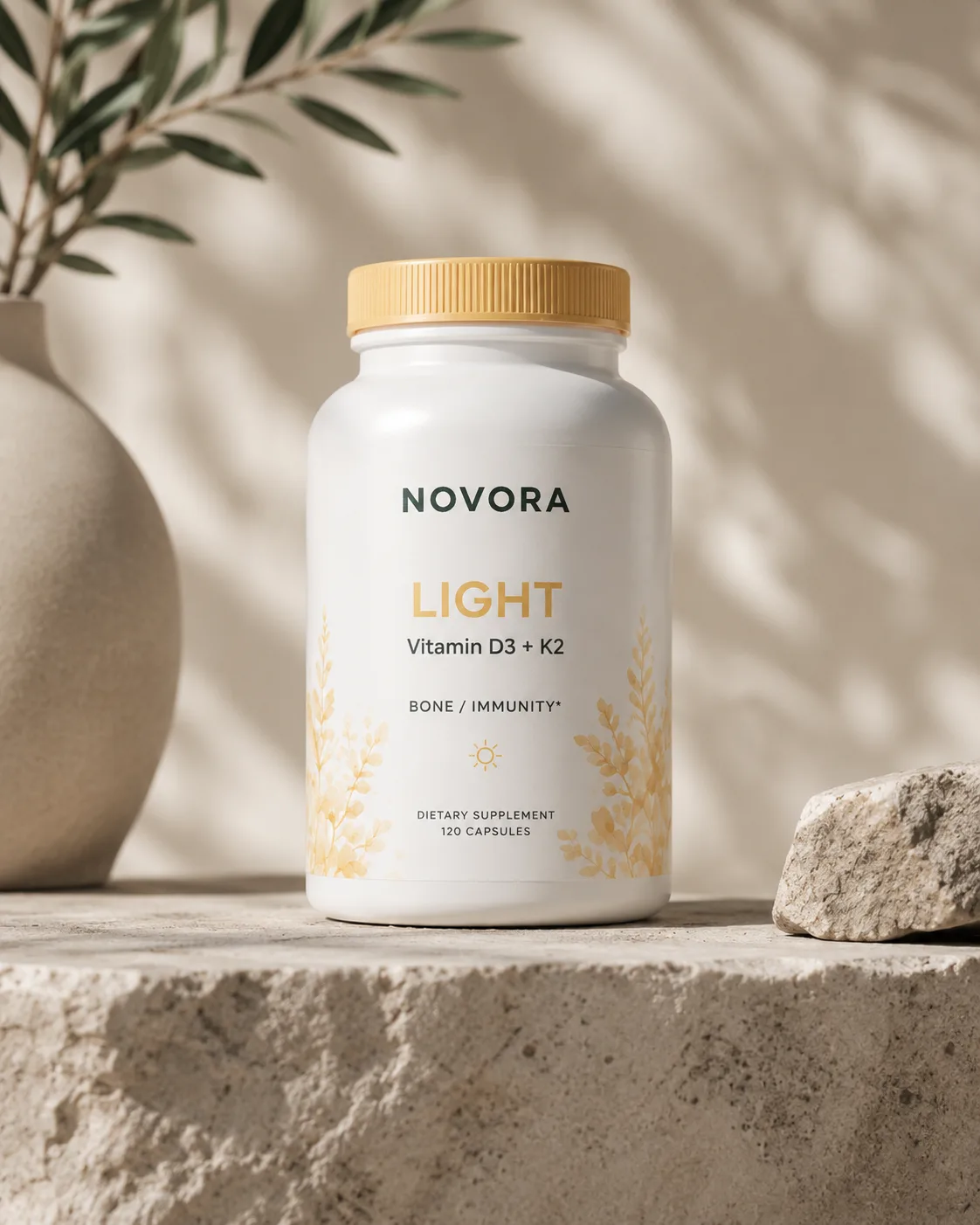
Why D3 (cholecalciferol) specifically
Vitamin D3, also called cholecalciferol, is the same form your skin produces from sunlight — and it's generally considered more effective at raising and maintaining blood levels than plant-derived D2. When a label just says "vitamin D," it's worth checking which form: D3 is the one most research, including the benefits below, is actually built on.
Bone density: the best-established benefit
Vitamin D governs how efficiently your body absorbs calcium from food, and adequate levels are recognized as supporting normal bone structure and density — one of the most consistently evidenced roles vitamin D plays. It's a slow, structural benefit, built over months of consistent intake, not something that shows up on a single blood test after a week.
Immune function: what's actually established
Vitamin D receptors exist throughout immune tissue, and adequate vitamin D status is recognized as contributing to the normal function of the immune system. The accurate framing is "supports normal function," not "prevents illness" — the second claim oversells what the evidence actually shows.
Energy: the more nuanced claim
Vitamin D plays a role in cellular energy metabolism, and low levels are associated with fatigue in observational research — but "associated with" isn't the same as "proven to fix." If persistent low energy is your main concern, a blood test is a more direct way to check whether vitamin D is actually the contributing factor before assuming a supplement will resolve it.
Mood and the darker months — the honest version
Vitamin D receptors sit in brain regions involved in mood regulation, and low levels show up more often in people with seasonal low mood — a real, if preliminary, connection. We cover this in more depth, including where the evidence is still developing, in Vitamin D in the Nordic winter.
Why 2,000 IU, and why that's higher than some labels default to
Nordic-latitude guidance generally sits higher than the minimums set for sunnier climates, because the UVB shortfall from October to March is more severe and prolonged here than in most of the research used to set baseline international minimums. A meaningful daily maintenance dose through the darker months reflects that gap rather than an arbitrary round number.
What's actually in the softgel
LIGHT's D3 softgel is built from cholecalciferol in a base of soybean oil and corn oil (fat carriers that support absorption of a fat-soluble vitamin), inside a gelatin softgel with glycerin and water. Worth knowing if you have a soy allergy or need a vegan-friendly product — this formulation isn't either.
Take it with food — it's fat-soluble
Vitamin D needs dietary fat to absorb properly, which is why it's formulated to be taken with breakfast rather than on an empty stomach. Any meal with a bit of fat in it works; you don't need to overthink the specific food.
Who's most likely to be running low
People who spend most daylight hours indoors, night-shift workers, older adults, people with darker skin tones, and anyone carrying more body fat (vitamin D is stored in fat tissue) all tend to test lower — not a diagnosis, just where a blood test is most worth prioritizing.
Testing is the only way to actually know
A 25-hydroxyvitamin D blood test is the only reliable way to know your status rather than guess from symptoms — it's a standard, inexpensive test most doctors can order, and it's the most direct way to confirm whether low levels are actually part of what you're feeling.
Common mistakes
Taking it on an empty stomach, stopping in summer without checking whether your levels actually recovered, and assuming a general multivitamin's vitamin D content matches Nordic-winter guidance (it usually doesn't — check the actual IU on the label) are the three most common gaps.
What to expect
Vitamin D supports bone density and normal immune function over the long run, not something you'll notice day to day. Consistency through the winter months is what the evidence is actually built on.
Frequently asked questions
Is LIGHT vegan or vegetarian?+
No — the softgel is made with gelatin, and the formula uses soybean and corn oil as carriers. If you need a vegan vitamin D, look specifically for a plant-based capsule and lichen-derived D3.
Does it contain soy?+
Yes, soybean oil is used as a carrier oil in the softgel. Worth knowing if you have a soy allergy or sensitivity.
Can I take more than the labeled dose?+
No — vitamin D is fat-soluble and stored in the body rather than excreted quickly, so more isn't automatically better or safer. Stick to the suggested use unless a doctor advises otherwise based on a blood test.
How is this different from the vitamin D in my multivitamin?+
Many multivitamins include vitamin D at a baseline level well below what's typically recommended for Nordic winters — check the actual IU or mcg amount on your multivitamin rather than assuming it's already covered.
What's the best time of day to take it?+
With a meal that contains some fat — breakfast or lunch both work well. There's no absorption benefit to taking it on an empty stomach or specifically at night.
Can vitamin D actually help with low mood in winter?+
It's a plausible contributing factor for some people, since low levels are more common alongside seasonal low mood — but it isn't a proven standalone treatment. Mood that's significantly affecting daily life is worth discussing with a doctor, not self-treating with a supplement alone.
How long before I notice a difference?+
Bone density and immune support are slow, cumulative effects — you generally won't "feel" vitamin D working the way you might notice a stimulant. Consistent daily use through the darker months is what matters, not a specific number of days.
Is it safe for kids?+
Many Nordic health authorities already recommend vitamin D supplementation for children through the darker months — check current local guidance and your pediatrician's advice for age-appropriate dosing rather than using an adult-formulated softgel.
This article is for general information and isn’t medical advice. Talk to a healthcare professional before starting any new supplement, especially if pregnant, nursing, under 18, or managing a medical condition.