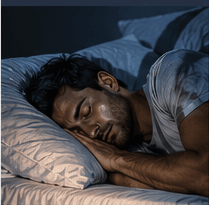
Blue light and sleep: how much does it actually matter?
"Turn off your screens" is common advice. Here's what the research on blue light and melatonin suppression actually shows.

The actual mechanism
Light exposure, particularly in the blue wavelength range, suppresses melatonin production by signaling to your brain's circadian clock that it's still daytime — a real, well-documented photobiological effect, not a wellness-content exaggeration.
Is blue light uniquely worse than other light?
Blue wavelengths do have a stronger suppressive effect on melatonin than red or amber light at comparable brightness, but the honest nuance is that overall brightness (lux) matters enormously too — a dim blue-lit screen may affect you less than a very bright warm-toned room light.
What the phone-specific research actually shows
Studies on melatonin suppression from phone and tablet use show real, measurable effects, particularly with screens held close to the face at high brightness for extended periods before bed — though effect sizes vary across studies, and "some suppression" doesn't automatically mean "ruined sleep" for everyone.
Do blue-light blocking glasses actually help?
Some research shows modest benefits for melatonin preservation and subjective sleep quality with blue-light blocking glasses used in the hours before bed; results are mixed and effect sizes are generally modest rather than dramatic — a reasonable low-cost habit, not a guaranteed fix.
What matters more than blue light alone
Content and stimulation matter alongside wavelength — scrolling stressful news or an engaging show activates alertness through cognitive and emotional arousal, independent of the light itself. A dim screen showing something stimulating can still delay sleep.
Practical steps with real evidence behind them
Reducing screen brightness, using night-mode color shifting, and simply creating a buffer of low-stimulation time before bed all have reasonable support — see how this fits into a broader routine in why NIGHT's ingredients are paired the way they are.
Frequently asked questions
Do phone night-mode settings actually help sleep?+
They reduce blue-light emission and have some research support for preserving melatonin better than an unfiltered screen, though they don't eliminate the alerting effect of screen content itself.
How long before bed should I stop using screens?+
There's no single proven cutoff, but a 30–60 minute low-stimulation buffer before bed is a reasonable, commonly recommended target based on the general research on pre-sleep arousal.
Are blue-light glasses worth buying?+
They're low-risk and have modest evidence behind them — reasonable to try, but not a guaranteed fix if other sleep habits (schedule, room brightness, stimulating content) aren't also addressed.
Does reading on a tablet before bed matter less than scrolling social media?+
Likely somewhat, since content-driven emotional and cognitive arousal is a separate factor from light wavelength alone — a calm, low-stimulation activity is generally better than an engaging or stressful one, regardless of device.
Is blue light from a phone worse than my bedroom lamp?+
It depends on both wavelength and brightness — a very bright warm lamp can suppress melatonin too, so "blue light" isn't the whole story on its own.
This article is for general information and isn’t medical advice. Talk to a healthcare professional before starting any new supplement, especially if pregnant, nursing, under 18, or managing a medical condition.