Valerian and Chamomile: why they’re paired for sleep
Two of the most-studied calming herbs, and why they tend to show up together.

The short answer
Valerian root and Chamomile flower are two of the longest-used botanicals for winding down, and they work on slightly different parts of the same problem. Valerian is more associated with helping you fall asleep faster; Chamomile is milder and better studied for reducing general tension. Paired together, they cover more of the pre-sleep window than either does alone.
What Valerian actually does
Valerian root is thought to increase levels of GABA, a neurotransmitter that calms nervous system activity — which is also why it's often paired directly with GABA itself in sleep formulas. It's not a sedative in the pharmaceutical sense; the effect is gradual rather than immediate, which is part of why it's taken consistently rather than as a one-off.
What Chamomile actually does
Chamomile contains apigenin, a compound that binds to the same brain receptors as anti-anxiety medications, but far more mildly. It's better evidenced for reducing generalized tension and mild sleep disturbance than for treating diagnosed insomnia — a gentle nudge rather than a fix.
Why they're combined with L-Tryptophan, Lemon Balm and Passion Flower
Each ingredient targets a slightly different mechanism: L-Tryptophan is a precursor your body uses to make serotonin and, eventually, melatonin; Lemon Balm and Passion Flower are both traditionally used for occasional stress. Combining several mild-acting ingredients is a common formulation approach — it spreads the effect across a few mechanisms instead of relying on one ingredient at a higher dose.
Where Melatonin fits into the blend
Melatonin is the hormone your body already produces as daylight fades, signaling that it's time to wind down. Taken as a supplement, it's better understood as a timing signal than a sedative — useful for nudging your body clock, especially if screens, shift work or travel have thrown it off. It's the one ingredient in the blend with a fairly direct, same-night effect; the herbal ingredients work more gradually alongside it.
Why a blend instead of one ingredient at a higher dose
It's tempting to assume a single, larger dose of one ingredient would work better than several mild ones — but sleep isn't caused by one mechanism, so it doesn't respond to one lever. Spreading support across several complementary pathways (calming neurotransmitter activity, easing tension, supporting the sleep-wake cycle) is a more realistic match for how falling and staying asleep actually works than maximizing a single input.
Who should be cautious
Herbal sleep blends are generally well tolerated, but anyone pregnant or breastfeeding, under 18, or managing a diagnosed sleep or medical condition should talk to a doctor before starting one — the same standard guidance that applies to any supplement. It's also worth checking with a pharmacist if you're already taking prescription sedatives, since combining calming ingredients isn't something to do casually.
How it fits into a broader sleep routine
No ingredient list fixes a bedroom that's too bright, a bedtime that shifts by two hours every night, or a habit of scrolling until midnight. A sleep formula works best as one part of a routine that already includes some consistency — a similar wind-down time, a dark room, and caffeine cut off well before evening. Ingredients support the process; they don't replace the conditions sleep actually needs.
What to expect
Herbal sleep blends tend to work best as part of a consistent evening routine rather than an as-needed fix — most people report a difference within one to two weeks of nightly use, not the first night. If you're wondering whether your own sleep is actually falling short, national sleep data for the US and Canada puts the average adult's shortfall in context.
Dosage and timing: when to actually take it
Most people take a blend like this 30 to 60 minutes before their intended bedtime, giving the herbal ingredients time to take effect and giving melatonin time to act as the timing cue it's meant to be. Taking it right as you lie down tends to work less well than building in that short buffer — treat it as the start of your wind-down, not the last thing before lights out.
How it compares to over-the-counter antihistamine sleep aids
Diphenhydramine-based sleep aids (the active ingredient in most drugstore "PM" products) work by blocking histamine, which does induce drowsiness — but they're also associated with next-day grogginess, and aren't intended for regular long-term use. A botanical blend works through gentler, more targeted mechanisms and is generally better suited to nightly use as part of an ongoing routine rather than an occasional knockout dose.
Daytime calm and nighttime sleep are different problems
It's worth separating "I can't switch off during the day" from "I can't fall asleep at night" — they're related but not the same issue, and they call for different tools. Ingredients like L-theanine support calm, clear-headed focus without drowsiness during the day; Valerian, Chamomile and Melatonin are formulated specifically for the transition into sleep at night. Using a daytime-calm ingredient at bedtime, or a sleep blend during work hours, is a common mismatch worth avoiding.
Shift work, travel and jet lag — where melatonin timing matters most
Melatonin's main job is signaling your body clock, which makes timing more important than usual for shift workers or after crossing time zones — taking it at the wrong point in your new schedule can work against you rather than for you. For a typical fixed bedtime, this isn't something to overthink; it mostly matters when your sleep schedule itself is shifting.
Common mistakes people make with herbal sleep blends
The two most frequent: expecting a first-night effect the way you would from a sedative, and giving up after two or three nights when nothing dramatic happens. Herbal ingredients build their effect gradually with consistent nightly use — judging them on a single night's result is the most common reason people conclude, incorrectly, that a blend "doesn't work" for them.
Does effectiveness change over time?
Unlike some sedative medications, herbal sleep blends aren't generally associated with the kind of tolerance where you need an escalating dose to get the same effect — most people report it continuing to work at the same dose for months of nightly use. If a blend that used to help stops working, that's usually a signal something else has changed — stress levels, sleep environment, screen habits, a new medication — rather than the formula itself losing potency. Worth troubleshooting the routine around it before assuming the supplement itself needs to change.
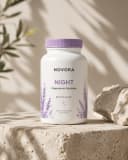
Frequently asked questions
Is NIGHT a sedative?+
No. It doesn't contain sedative drugs — it's a blend of botanicals and compounds formulated to support your body's own transition into sleep, not force it.
Will I feel groggy the next morning?+
The ingredients are chosen specifically to avoid a next-day hangover feeling, unlike some sedatives. Most people report waking up clear-headed rather than foggy.
Can I take it alongside melatonin I already have?+
NIGHT already contains melatonin, so adding more from elsewhere isn't necessary and could push your total intake higher than intended — check with a pharmacist if you're unsure.
How long can I take it for?+
It's formulated for regular nightly use as part of an ongoing routine. If you're relying on it for more than a few months without any improvement in your sleep, it's worth talking to a doctor.
Does it interact with alcohol?+
Combining any calming supplement with alcohol isn't recommended — alcohol already disrupts sleep architecture, and stacking sedative-adjacent effects isn't something to do without medical advice.
What if it doesn't work for me?+
Herbal blends work gradually and vary person to person. If two to three weeks of consistent nightly use makes no difference, the underlying issue may need a different kind of support — worth raising with a doctor rather than increasing the dose.
Can I take it if I wake up in the middle of the night rather than struggling to fall asleep?+
It's formulated primarily to support falling asleep at the start of the night, since that's when the melatonin timing cue and herbal ingredients are most relevant. Frequent middle-of-the-night waking is worth mentioning to a doctor, since it can have causes a sleep-onset blend isn't built to address.
Is it okay to take on an empty stomach?+
Yes — unlike fat-soluble supplements, there's no absorption reason to take it with food. Some people simply prefer folding it into an existing bedtime habit, like right after brushing their teeth.
Does it help with a racing mind, or just physical restlessness?+
Both are part of what it's formulated for — GABA and L-Tryptophan are more associated with the mental side of winding down, while Valerian and Chamomile lean more toward general physical calm. Everyone's version of "can't sleep" is a little different, which is part of why the blend spreads across several mechanisms rather than targeting one.
This article is for general information and isn’t medical advice. Talk to a healthcare professional before starting any new supplement, especially if pregnant, nursing, under 18, or managing a medical condition.