Melatonin vs valerian: how they're different, and why NIGHT uses both
One is a timing signal, the other a calming herb. They solve different parts of "I can't sleep."

A timing signal vs a calming herb
Melatonin is the hormone your body already produces as daylight fades — supplementing it is better understood as reinforcing a timing cue than sedating yourself. Valerian root works differently: it's thought to increase GABA activity, calming general nervous system arousal gradually rather than signaling a specific bedtime. Short sleep is genuinely common — see why so many Americans and Canadians aren't sleeping enough for the national data behind it.
Which one acts faster
Melatonin tends to have a fairly direct, same-night effect on sleep timing, especially when your body clock has been thrown off by screens, shift work or travel. Valerian works more gradually — most people report a difference after consistent nightly use over one to two weeks, not the first night.
Where melatonin is the more direct fit
Jet lag, shift work, or a bedtime that's drifted later and later — anywhere the core issue is timing rather than general tension — is where melatonin's mechanism is most directly relevant. Timing the dose to your target sleep window matters more here than with valerian.
Where valerian is the more direct fit
General wind-down difficulty, racing thoughts, or a day that leaves you too wired to settle — situations closer to "tension" than "clock misalignment" — are closer to what valerian is formulated to ease. It's a gentler, broader-acting botanical rather than a precise timing tool.
Why NIGHT combines both rather than picking one
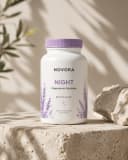
Falling and staying asleep isn't caused by one mechanism, so a blend that only addressed timing (melatonin alone) or only addressed general tension (valerian alone) would leave half the problem unaddressed for a lot of people. NIGHT pairs both alongside Chamomile, GABA, L-Tryptophan, Lemon Balm and Passion Flower — melatonin for the timing cue, the botanicals for the broader wind-down.
Does melatonin cause next-day grogginess?
At typical supplemental doses, most people don't report the kind of next-day fog associated with sedative medications — melatonin isn't a sedative in that pharmacological sense. Grogginess is more commonly linked to taking too high a dose or taking it too late relative to your actual wake time.
Tolerance and dependency — the honest comparison
Neither melatonin nor valerian is associated with the kind of escalating-dose tolerance seen with some sedative medications — most people report both continuing to work at the same dose over months of use. If either stops working, it's usually worth looking at what changed in the routine around it before assuming the ingredient itself lost potency.
Dosing and timing basics
Melatonin's timing-signal role makes when you take it matter more than usual — generally 30 to 60 minutes before your intended bedtime. Valerian doesn't have the same timing sensitivity, though taking it as part of the same wind-down window is a practical habit either way.
Can you take valerian without melatonin, or vice versa?
Yes — they're not dependent on each other, and some people prefer one alone if they've identified their issue is clearly timing-related or clearly tension-related. A blend like NIGHT is built for the more common case where it's genuinely a mix of both.
Common mistakes with either
Expecting a first-night effect the way you would from a sedative, and — specific to melatonin — taking it inconsistently or at random times rather than anchoring it to a target bedtime, are the two most frequent reasons people conclude a sleep aid "doesn't work" when the issue is really usage pattern.
Daytime calm and nighttime sleep are different problems
It's worth separating "I can't switch off during the day" from "I can't fall asleep at night." L-theanine and magnesium address the daytime side; melatonin and valerian are formulated specifically for the transition into sleep — using one for the other's job is a common mismatch.
Frequently asked questions
Is it safe to take melatonin and valerian together?+
Yes — they work through different mechanisms and are commonly combined in sleep blends like NIGHT specifically because they address different parts of the same problem.
Which works faster, melatonin or valerian?+
Melatonin generally has a more direct, same-night effect on timing. Valerian builds its effect gradually with consistent nightly use, typically over one to two weeks.
Will I feel groggy the next morning from melatonin?+
Most people don't, since melatonin isn't a sedative in the pharmacological sense — grogginess is more often linked to too high a dose or taking it too late relative to your wake-up time.
Do I need melatonin if my only issue is jet lag?+
That's specifically where melatonin's timing-signal mechanism is most relevant — it's the ingredient most directly suited to shifting your body clock across time zones.
Can valerian alone help with jet lag?+
It can support general calm around travel stress, but it doesn't address circadian timing the way melatonin does — melatonin is the more targeted tool for that specific problem.
How long can I take melatonin for?+
It's generally used for regular nightly support as needed. If you're relying on it for months without any improvement in your sleep, it's worth discussing with a doctor rather than continuing to increase the dose.
Does alcohol interact with either?+
Combining any calming or sleep-supporting ingredient with alcohol isn't recommended — alcohol already disrupts sleep architecture on its own.
Is NIGHT's melatonin dose considered high?+
It's formulated as one part of a seven-ingredient blend rather than a standalone high-dose melatonin product. Check the label's specific amount, and avoid adding extra melatonin from another source on top of it.
This article is for general information and isn’t medical advice. Talk to a healthcare professional before starting any new supplement, especially if pregnant, nursing, under 18, or managing a medical condition.