What is cortisol, really? The stress hormone, explained
It gets blamed for everything from belly fat to bad sleep. Here's what cortisol actually does — and where the claims outrun the evidence.

What cortisol actually is
Cortisol is a hormone produced by your adrenal glands, released in a natural daily rhythm that peaks shortly after waking and gradually declines through the day — not something that's simply "good" or "bad," but a normal part of regulating energy, blood sugar and alertness.
Why it's called the stress hormone
Cortisol rises in response to physical or psychological stress as part of the body's fight-or-flight response, mobilizing energy and sharpening short-term alertness — a genuinely useful, adaptive response to an acute stressor, not a malfunction.
Where the wellness-industry claims outrun the science
"Cortisol belly," "cortisol face" and "cortisol detox" are popular wellness-content phrases without a settled evidence base behind them as distinct, diagnosable conditions. Chronic, sustained stress is genuinely linked to changes in fat distribution and other health markers over time — but the specific, tidy narratives attached to it online usually oversimplify a more complicated picture.
Acute vs chronic cortisol elevation — the distinction that actually matters
A short-term cortisol spike (a stressful meeting, a workout) is a normal, healthy response your body is built to handle. Chronically elevated cortisol from ongoing, unresolved stress is the pattern actually linked to worse outcomes — sleep disruption, immune changes, mood effects — and it's the duration and consistency, not any single spike, that matters.
Can you "lower" cortisol with a supplement?
No single ingredient reliably and predictably lowers cortisol in a way that's been robustly demonstrated — some research on ingredients like L-theanine and ashwagandha shows modest effects on stress markers, but framing any product as a direct "cortisol lowerer" oversells what the evidence supports.
What actually influences cortisol patterns
Sleep consistency, exercise timing, and chronic stress exposure are the better-evidenced levers — a disrupted sleep schedule specifically is linked to a blunted, less healthy daily cortisol rhythm, which is part of why sleep and stress are so tightly connected.
Where L-theanine fits into this honestly
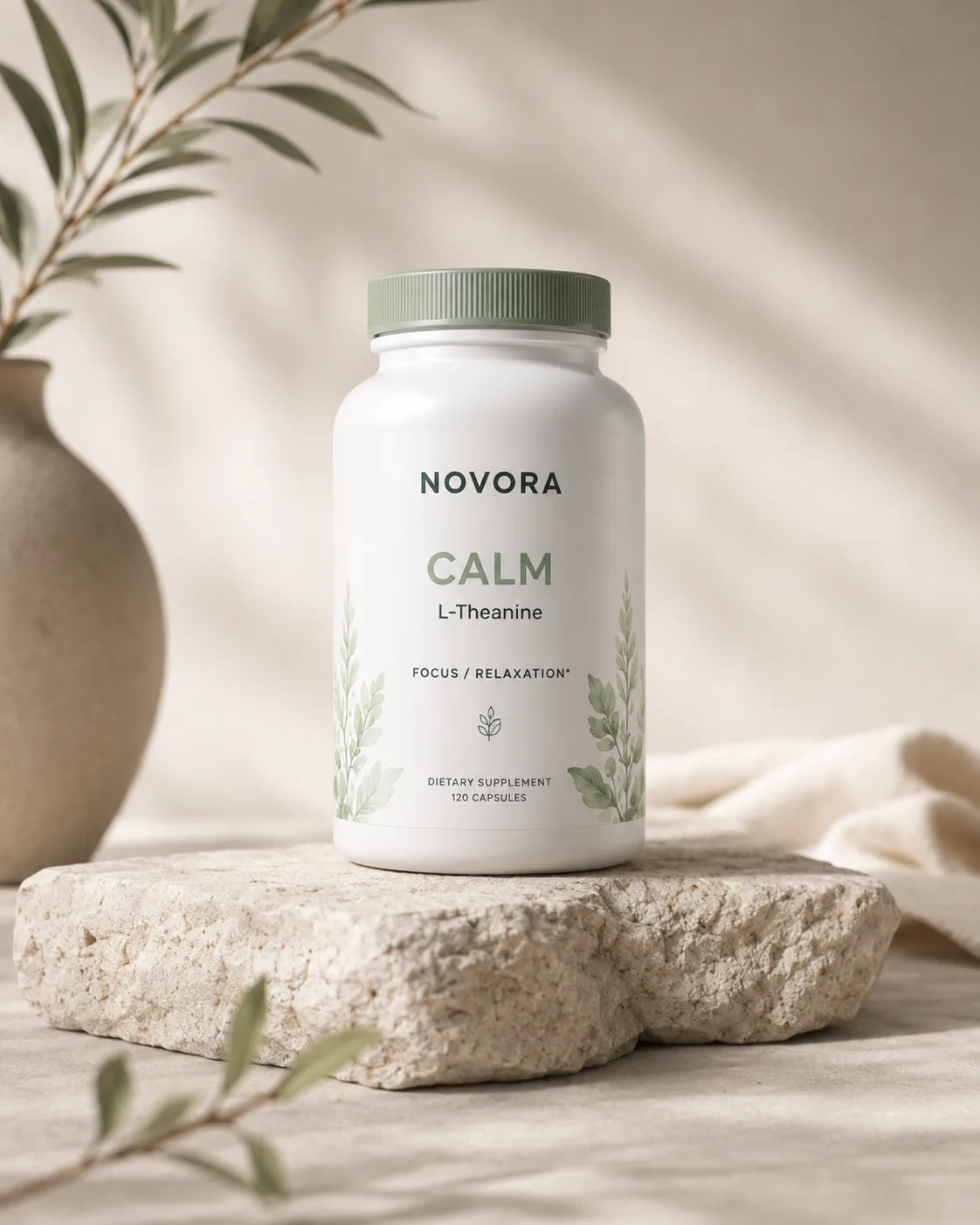
L-theanine is associated with reduced subjective stress under everyday conditions — see the calm-without-crash amino acid for the full picture. It's reasonable daily support for everyday tension, not a targeted "cortisol-lowering" treatment.
Frequently asked questions
Is "cortisol face" or "cortisol belly" a real medical diagnosis?+
No — these are popular wellness-content terms without a settled clinical definition, though chronic stress genuinely can influence weight distribution over time through more complex mechanisms.
Can I test my cortisol levels?+
Yes, via blood, saliva or urine testing ordered by a doctor — this is the only reliable way to know your actual levels rather than inferring from symptoms.
Does high cortisol cause weight gain?+
Chronically elevated cortisol is associated with changes in fat storage patterns in research, but it's one factor among many, not a standalone explanation for weight gain.
Do adaptogens actually lower cortisol?+
Some, like ashwagandha, have modest research support for reducing subjective stress and some cortisol markers in small studies — promising, but not as dramatic or reliable as marketing sometimes suggests.
Is morning cortisol supposed to be high?+
Yes — a cortisol peak shortly after waking is a normal, healthy part of the daily rhythm, not a sign of a problem.
This article is for general information and isn’t medical advice. Talk to a healthcare professional before starting any new supplement, especially if pregnant, nursing, under 18, or managing a medical condition.