L-theanine vs magnesium for stress: how they're different
Both get recommended for everyday stress. They work through completely different mechanisms — here's which fits which problem.
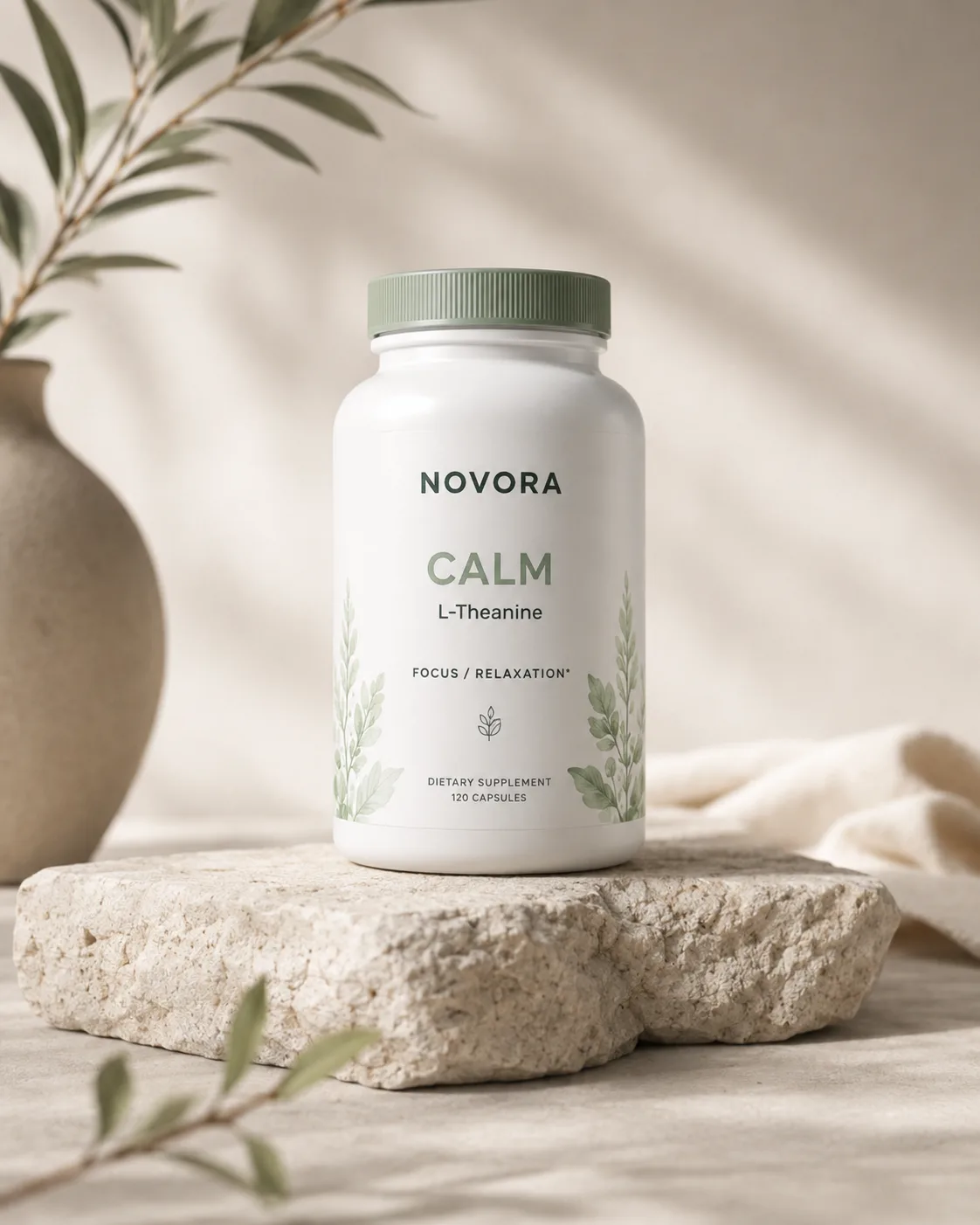
Two different mechanisms, both filed under "stress"
L-theanine is an amino acid associated with increased alpha brain wave activity — a relaxed-but-alert state. Magnesium is a mineral involved in over 300 enzymatic reactions in the body, including nerve signal regulation and muscle relaxation. They both get recommended for stress, but they're not interchangeable — one is a nervous-system-signaling amino acid, the other a mineral cofactor.
Speed of effect: same-day vs cumulative
L-theanine's calming effect is reported within roughly 30 to 60 minutes of taking it — it's built for situational use. Magnesium's contribution to normal psychological function and reduced tiredness is a more gradual, deficiency-correcting effect that shows up over days to weeks of consistent intake, not a single dose.
Does either cause drowsiness?
L-theanine specifically doesn't — it shifts the quality of alertness rather than suppressing it, which is why it's positioned for daytime use. Magnesium doesn't sedate either, though some people find it eases them toward sleep in the evening as part of its broader role in nervous system regulation — a milder, secondary effect rather than its primary mechanism.
Who tends to reach for L-theanine
People who feel "wired but tense" during the day — before a meeting, alongside a coffee to soften the jitters, or any point where focus is scattering under everyday pressure. It's built for situational, daytime use without blunting alertness.
Who tends to reach for magnesium
People managing a broader pattern of tension, muscle tightness, or poor sleep quality often reach for magnesium as an ongoing daily habit rather than a same-day fix — it's addressing a nutrient gap, not providing an acute calming hit.
Can you take both?
There's no known interaction between L-theanine and magnesium — they work through unrelated pathways, so combining them is common and not something to be cautious about the way combining two sedative-adjacent ingredients would be.
Magnesium forms, briefly
Not all magnesium is equal for absorption — forms like glycinate and citrate are generally better absorbed and gentler on digestion than magnesium oxide, which is cheaper but more likely to cause loose stools at higher doses. Worth checking the form on any magnesium product's label, not just the total elemental magnesium figure.
The caffeine question
L-theanine is specifically well-evidenced alongside caffeine — the combination is associated with improved focus and reduced jitteriness compared to caffeine alone. Magnesium doesn't have that same specific pairing evidence; its role is more general.
What the research doesn't support for either
Neither is studied or positioned as a treatment for clinical anxiety disorders. Both are evidenced for everyday, situational stress and mild tension — a meaningfully different, much more modest claim than "anxiety treatment," and worth keeping that distinction honest.
Common mistakes
Expecting magnesium to work like L-theanine (fast, situational) or expecting L-theanine to fix a magnesium deficiency's broader symptoms (muscle cramps, poor sleep quality) are the two most common mismatches — they're solving different problems even when the marketing language overlaps.
Building a routine around either
L-theanine works well taken as needed, alongside your morning coffee or before something that reliably makes you tense. Magnesium works better as a consistent daily habit, since its benefits are tied to correcting an ongoing gap rather than delivering a same-day effect.
Frequently asked questions
Is L-theanine or magnesium better for stress?+
Neither is universally "better" — L-theanine suits same-day, situational tension without drowsiness; magnesium suits a broader, more gradual pattern of tension and is corrected over days to weeks of consistent intake.
Can I take L-theanine and magnesium together?+
Yes — there's no known interaction, and many people combine a daytime L-theanine habit with an evening magnesium one, since they're addressing different parts of the day and different mechanisms.
Does CALM contain magnesium?+
No — CALM is formulated around L-theanine specifically, not a magnesium-and-theanine blend. If magnesium is what you're after, it's worth looking for a dedicated magnesium formula.
Will magnesium make me drowsy during the day?+
Not typically at standard doses, though some people are more sensitive to its calming, muscle-relaxing effect than others. If you notice drowsiness, evening use is a reasonable adjustment.
How fast does L-theanine work?+
Most people report a noticeable shift within 30 to 60 minutes, which is part of why it's taken situationally rather than on a fixed schedule.
Is magnesium oxide as good as other forms?+
It's the cheapest and most common form, but generally considered less well absorbed than glycinate or citrate, and more likely to have a laxative effect at higher doses. Worth checking the form, not just the total mg, on any label.
Can either help with sleep?+
Indirectly — easing daytime tension (L-theanine) or supporting nervous system regulation (magnesium) can make it easier to wind down. Neither is dosed or formulated as a dedicated sleep aid the way <a href="melatonin-vs-valerian-sleep" style="color:#2f5d47;font-weight:600;">a nighttime blend with valerian and melatonin</a> is.
Are these safe to take long-term?+
Both are generally well tolerated for ongoing daily use in healthy adults. As with any supplement, check with a doctor if you're pregnant, nursing, or managing a medical condition.
This article is for general information and isn’t medical advice. Talk to a healthcare professional before starting any new supplement, especially if pregnant, nursing, under 18, or managing a medical condition.