Are Americans getting enough omega-3? What NHANES actually found
Government nutrition survey data shows a persistent, well-documented gap between recommended and actual EPA and DHA intake.

The headline finding
An analysis of NHANES data from 2003–2008 found that combined EPA and DHA intake from food and supplements among US adults averaged just 41mg and 72mg per day respectively — far short of the roughly 250mg/day EPA+DHA figure widely referenced by expert nutrition bodies as a reasonable general target (NHANES analysis, published in Nutrition Journal).
The gap is even starker in some groups
A separate NHANES analysis covering 2001–2014 found that more than 95% of women of childbearing age, including pregnant women, did not meet a 250mg/day EPA+DHA intake recommendation — one of the largest documented gaps in this entire dataset.
Why the shortfall is so consistent
The researchers behind the underlying analyses point to the same explanation across multiple studies: most Americans simply don't eat oily fish (salmon, mackerel, sardines) regularly enough to close the gap through diet alone, and the data suggests supplementation is a reasonable route for closing it for people who don't.
What EPA and DHA are actually doing
We cover the mechanisms — cardiac function, brain structure, vision — in more depth in the benefits of omega-3, explained. The short version: these are structural, ongoing-supply nutrients your body can't produce on its own, not a same-day-effect supplement.
Does this gap show up outside the US too?
Similar dietary-intake shortfalls have been documented in other developed countries with comparable diets, including Australia — this isn't a uniquely American finding, but a broader pattern tied to how little oily fish most Western diets actually include.
What OMEGA is formulated to close
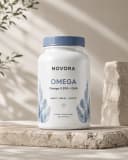
OMEGA delivers 180mg EPA and 120mg DHA per softgel from fish oil concentrate — a straightforward way to move toward the intake levels the NHANES data shows most people are falling well short of through diet alone.
A gap in data doesn't mean a gap in importance
The consistency of this finding across multiple independent NHANES analyses, spanning different years and different population subgroups, is part of why omega-3 intake is treated as a genuine, common nutritional gap in nutrition research — not a fringe supplement-industry talking point.
Frequently asked questions
Where does the 250mg/day EPA+DHA figure come from?+
It reflects a combined EPA+DHA target referenced by multiple expert nutrition bodies internationally as a reasonable general intake goal — not a single official US government RDA, since the US hasn't set one specific number the way it has for some other nutrients.
Does eating fish once a week close the gap?+
It helps, but the NHANES data suggests most people eating fish only occasionally still fall well short of the target — consistency and portion size both matter more than people expect.
Is this data still relevant, given it's from 2003–2014?+
More recent NHANES analyses (2003–2014 data specifically for the childbearing-age gap) show the same pattern persisting over a decade later, suggesting this isn't a temporary or already-closed gap.
Do vegetarians and vegans have an even bigger gap?+
Almost certainly, though the NHANES analyses cited here weren't broken out by diet type specifically — vegetarians and vegans get no EPA/DHA from fish and would need an algae-based source to close any part of the gap through supplementation.
Is more always better once you're supplementing?+
No — closing a documented population-level gap doesn't mean unlimited amounts are beneficial. Follow the suggested use on your product label rather than assuming more is automatically better.
This article is for general information and isn’t medical advice. Talk to a healthcare professional before starting any new supplement, especially if pregnant, nursing, under 18, or managing a medical condition.