The benefits of omega-3: what EPA and DHA actually support
Heart, brain, eyes, joints — omega-3 gets credited with a lot. Here's what the evidence actually backs, ingredient by ingredient.

Two fatty acids, one supplement, two different jobs
EPA (eicosapentaenoic acid) and DHA (docosahexaenoic acid) are usually talked about as a pair, but they're not interchangeable — EPA is more associated with cardiovascular and metabolic support, while DHA is a structural component of brain and retinal tissue. A quality fish oil softgel provides both because the research base for "omega-3s" as a category is really the combined evidence for these two distinct fatty acids.
Heart health: what's actually well-evidenced
The clearest, most established benefits of EPA and DHA relate to normal cardiac function and the maintenance of normal blood triglyceride levels — this is well-replicated territory, not a fringe claim. It's a maintenance effect built on regular daily intake, not something that shows up after one softgel.
Brain function: DHA's structural role
DHA makes up a meaningful share of the fatty acid content in brain tissue, and it's recognized as contributing to normal brain function across life stages. This is a structural, ongoing-supply argument rather than a claim that omega-3 sharpens thinking on the day you take it.
Vision: DHA's other well-established role
DHA is concentrated in the retina, and adequate DHA status is recognized as supporting normal vision. Like the brain-function evidence, this is about maintaining a nutrient your eye tissue actually uses structurally, not a short-term visual effect.
Joint comfort in physically active people
Some research on omega-3 intake in people who put regular physical strain on their joints reports a modest supportive effect on comfort during activity. It's a smaller, more specific body of evidence than the heart and brain research — worth knowing if that's part of why you're interested, but not the headline benefit.
What the research doesn't yet support
Omega-3 gets credited online with everything from mood regulation to skin clarity to weight management. Some of this is a plausible, active area of research; none of it is settled enough to promise. We'd rather point you to the well-evidenced heart, brain and vision benefits than stack on claims the data doesn't clearly back.
EPA vs DHA: how to think about the ratio
Different products lean differently — some skew EPA-heavy for cardiovascular focus, others DHA-heavy for brain and vision focus. Neither ratio is universally "better"; it depends on which half of the evidence base matters more to you, though most people are well served by a formula that includes a meaningful amount of both rather than one to the near-exclusion of the other.
What's actually in the softgel
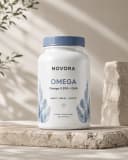
OMEGA is built from fish oil concentrate delivering EPA and DHA, in a softgel made from gelatin, glycerin and water, with added vitamin E to help protect the oil from oxidation. It's a straightforward formulation — no proprietary blends obscuring how much of each fatty acid you're actually getting.
Why the softgel format isn't vegan
Standard fish oil softgels use gelatin (an animal-derived protein) as the capsule shell, which makes this format unsuitable for vegetarians and vegans regardless of the oil inside. Algae-based DHA/EPA in a vegan capsule shell is the alternative if that matters to you — a genuinely different product, not just a marketing variant.
Freshness and oxidation — the quality issue that actually matters
Fish oil can oxidize (go rancid) with heat, light and time, which both degrades its fatty acid content and is behind the "fishy burp" complaint some people report. Storing softgels in a cool, dark place and checking for a stale or overly fishy smell when you first open the bottle are the practical steps that matter more than most other quality claims on a label.
Who benefits most from supplementing
People who don't regularly eat oily fish (salmon, mackerel, sardines) are the clearest candidates, since diet alone often falls short of the intake levels the cardiac and brain research is built on. Vegetarians and vegans are almost by definition in this group unless they're specifically supplementing with an algae-based source.
How it complements vitamin D
Omega-3 and vitamin D support different, non-overlapping systems, so there's no interaction to worry about — many people take both with the same meal since both are fat-soluble and absorb better alongside some dietary fat.
Common mistakes people make with fish oil
Taking it on an empty stomach (fat-soluble nutrients absorb better with food), ignoring a rancid smell when opening a new bottle, and expecting a short-term energy or mood boost from what's fundamentally a slow, structural, maintenance-oriented supplement are the three most common missteps.
What to expect, and when
The cardiac and blood lipid research this is built on reflects weeks to months of consistent daily intake, not a single dose — omega-3 is a background maintenance habit, not something you'll feel working day to day.
Frequently asked questions
How much EPA and DHA does OMEGA provide?+
Each softgel is formulated to deliver a targeted, labeled combination of EPA and DHA from fish oil concentrate — check your product label for the exact per-serving amount, and follow the suggested use on your bottle.
Why do I taste fish after taking it?+
"Fish burps" happen when the oil isn't fully digested before the capsule breaks down, or when the oil has started to oxidize. Taking it with a full meal and storing bottles in a cool, dark place both help reduce it.
Is there a vegan version?+
OMEGA's softgel uses gelatin, so it isn't vegan or vegetarian. Algae-based omega-3 supplements are the vegan-friendly alternative if that's a requirement for you.
Can I take omega-3 if I'm on blood thinners?+
Omega-3 at higher doses can have a mild blood-thinning effect of its own, so anyone on prescription blood thinners or with an upcoming surgery should talk to a doctor before starting a fish oil supplement.
Is it safe for kids?+
Omega-3 is widely studied in children too, but dosing differs from adult formulas — check with a pediatrician before giving an adult-formulated softgel to a child.
How should I store it?+
Keep it in a cool, dark place, away from direct light and heat, to slow oxidation. If a softgel smells strongly rancid rather than mildly fishy, it's past its useful quality.
Does it interact with other supplements?+
No well-established interaction with typical multivitamins, vitamin D or probiotics. If you're already getting a meaningful amount of omega-3 from diet or another supplement, it's worth checking your total intake rather than stacking sources blindly.
Why is purity mentioned so often with fish oil specifically?+
Fish oil is sourced from ocean fish, which can accumulate environmental contaminants — purity and sourcing matter more here than for a plant-derived or synthetic ingredient, which is why it's worth choosing a manufacturer that's transparent about sourcing and testing.
This article is for general information and isn’t medical advice. Talk to a healthcare professional before starting any new supplement, especially if pregnant, nursing, under 18, or managing a medical condition.